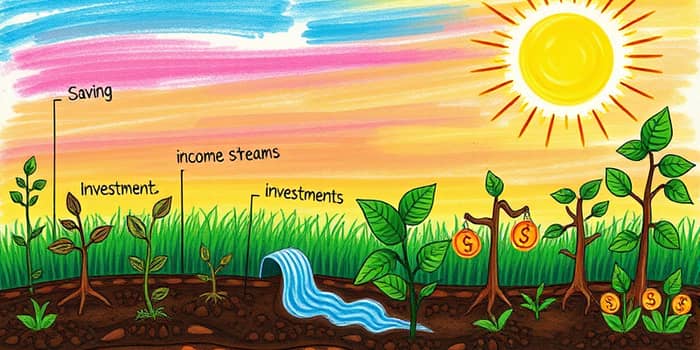
As we navigate the complexities of inflation, volatility, and shifting economic landscapes in 2026 and beyond, the journey to financial security can feel daunting.
However, by embracing a holistic approach that combines disciplined saving and diversified investing, you can transform challenges into opportunities for lasting prosperity.
This article will guide you through practical, actionable strategies to build and grow your wealth over the long term, empowering you to achieve financial freedom and peace of mind.
Building wealth starts with a solid foundation of saving and budgeting.
Without this base, even the best investment plans can falter.
Begin by setting aside at least 20% of income automatically into savings or investments.
Treat this like a non-negotiable bill to build consistent habits and enable the magic of compounding.
An emergency fund is crucial for financial resilience.
Maintain 3-6 months of expenses in high-yield savings to protect against unexpected events like job loss or medical emergencies.
This liquidity ensures you can weather storms without derailing your long-term goals.
Effective budgeting involves controlling expenses and eliminating waste.
These steps create a disciplined framework that supports wealth accumulation.
Increasing your income accelerates wealth building by expanding the gap between what you earn and what you spend.
Develop multiple streams of income generating $50 daily to add significant yearly gains, such as $18,000.
This diversification reduces reliance on a single paycheck and enhances financial stability.
Focus on high-income skills that are in demand.
Examples include freelancing in tech, digital marketing, or consulting.
By expanding your savings rate through income enhancement, you create more capital for investments.
This proactive approach turns earning potential into tangible wealth.
Investing is the engine that drives long-term wealth growth.
It allows your money to work for you through market returns and compounding.
Invest 5-10% of income regularly for long-term growth to build a robust portfolio over time.
Diversification across asset classes mitigates risk and maximizes opportunities.
Here are top investment recommendations for 2026 and beyond:
General rules for successful investing include holding investments for the long term.
Hold investments for 3-5+ years minimum to reduce risk and benefit from market cycles.
By following these principles, you can navigate economic shifts with confidence.
Optimizing taxes and retirement planning is essential for maximizing wealth retention.
In 2026, specific strategies can leverage potential law changes.
Use Roth conversions to lock in lower tax rates before they potentially rise.
This move allows you to pay taxes now at a lower rate, benefiting from tax-free growth later.
These tactics ensure that more of your money stays in your pocket, compounding over time.
Effective risk management safeguards your wealth against unexpected downturns.
It involves proactive measures to protect your assets and ensure long-term stability.
Asset allocation across public and private markets is a core principle for downside protection.
This diversification helps account for inflation and volatility in the economy.
By incorporating these practices, you build a resilient financial foundation that can withstand challenges.
Cultivating the right mindset is the final piece of the wealth-building puzzle.
It transforms financial planning from a chore into a purposeful journey.
Embrace intentionality over austerity in financial planning to find joy in the process.
This shift reframes money emotionally, reducing stress and fostering positive habits.
Start with key habits that reinforce discipline and growth.
For women and families, focus on fundamentals before tackling long-term goals like retirement or home ownership.
By integrating these mindset shifts, you create a sustainable path to wealth that aligns with your values and aspirations.
Building wealth is a marathon, not a sprint.
With patience, persistence, and the strategies outlined here, you can achieve financial independence and leave a lasting legacy.
References