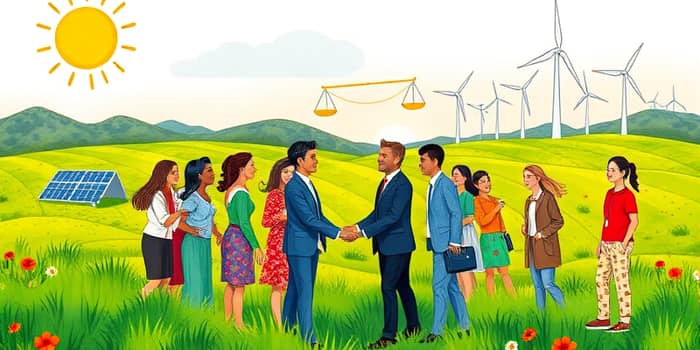
In a world where financial decisions can shape lives and communities, ethical lending emerges as a beacon of hope and integrity.
It transcends traditional profit-driven models by embedding moral principles and social responsibility into every transaction.
This approach ensures that credit serves as a tool for empowerment, not exploitation, fostering a sustainable future for all.
As consumers become more conscious, the demand for transparent and fair financial services is rising dramatically.
Ethical lending answers this call, offering a pathway to build trust and prevent hardship in everyday life.
By prioritizing people over profit, it transforms how we think about money and its impact on society.
Financial systems have long been criticized for prioritizing gains over human well-being.
Ethical lending addresses this by focusing on long-term well-being and community impact.
It prevents over-indebtedness and promotes inclusive access, ensuring loans do not harm borrowers or the environment.
This foundation of trust is crucial in times of crisis, such as during the COVID-19 pandemic.
Flexibility in repayment saved countless livelihoods, demonstrating the power of compassionate finance.
Beyond individual benefits, ethical lending strengthens economies by funding projects that address social needs.
It builds resilient communities where everyone has a chance to thrive without fear of exploitation.
At its heart, ethical lending is guided by a set of universal principles that ensure fairness and accountability.
These principles include transparency, affordability, and ethical behavior in all interactions between lenders and borrowers.
To illustrate, consider the moral decision framework developed by experts, which provides a clear structure for evaluating lending practices.
This table highlights the shared responsibilities between lenders and borrowers, emphasizing mutual benefit and ethical conduct.
It serves as a practical guide for ensuring that loans create positive outcomes rather than harm.
Beyond the framework, specific principles guide daily operations in ethical lending, making it actionable and effective.
These principles are not just ideals; they are actionable steps that transform lending into a force for good.
By adhering to them, financial institutions can build a reputation for integrity and trustworthiness.
Finding a responsible lender requires knowing what to look for in today's diverse financial landscape.
Many institutions have emerged that prioritize ethics over pure profit, offering models for others to follow.
By choosing partners with proven commitments to ethics, you align your finances with values that matter to you.
These examples show that ethical lending is not a niche concept but a growing movement.
Despite its benefits, ethical lending faces significant obstacles that must be acknowledged and addressed.
Overcoming these challenges requires continuous innovation and cultural shifts within financial institutions.
It calls for collaboration among stakeholders to create a more equitable financial system.
Empower yourself by asking the right questions when evaluating potential financial partners.
This proactive approach ensures that your financial decisions support sustainable and just practices.
By vetting lenders thoroughly, you can find partners who truly support sustainable and just practices.
This not only protects your interests but also contributes to broader social good.
The trajectory of ethical lending is promising, driven by technological advancements and growing consumer awareness.
As more people demand accountability, financial institutions are adapting to meet these expectations.
By embracing these trends, we can build a financial system that prioritizes people and planet over profit alone.
This future holds the promise of a world where credit empowers rather than exploits, creating lasting positive change.
Ethical lending is not just a trend; it is a necessary evolution towards a more equitable world.
By understanding its principles and choosing responsible partners, you contribute to a cycle of positive impact that benefits everyone.
Let your financial choices reflect your values, and together, we can foster a future where finance serves humanity with integrity and compassion.
References