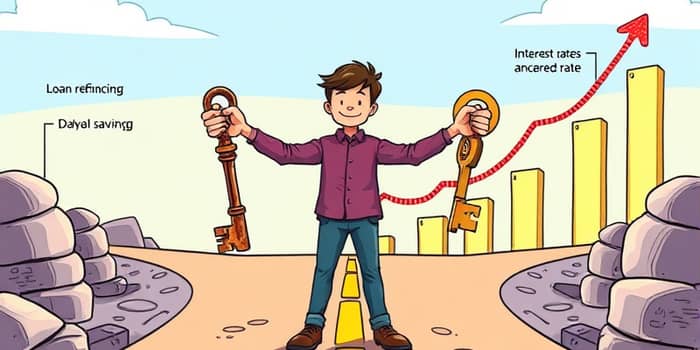
Imagine unlocking the door to financial freedom with a single decision.
Refinancing your loan can be that key, offering a path to lower monthly payments and reduced stress.
But timing is everything, and knowing when to act can make all the difference.
This guide will inspire you to take control of your finances with practical insights.
We'll explore how refinancing can transform your debt journey, making it manageable and even empowering.
By the end, you'll feel confident in deciding if this move is right for you.
Refinancing involves replacing an existing loan with a new one.
This can secure better terms, such as reduced interest rates or adjusted repayment periods.
It applies to various loans, including personal loans and mortgages.
The goal is to align your debt with your current financial situation.
Think of it as a financial reset button that can save you money.
There are several scenarios where refinancing can be a smart move.
Here are key situations to consider:
For example, refinancing a mortgage after credit improvement can lead to significant long-term savings.
Always calculate if the benefits outweigh the costs.
This proactive step can ease financial pressure and boost your peace of mind.
Not all refinancing opportunities are beneficial.
Avoid it in these cases to prevent potential pitfalls:
Consider your financial stability before proceeding.
A misstep can lead to increased financial strain and regret.
Taking a cautious approach ensures you protect your hard-earned money.
Understanding the numbers is crucial for a successful refinance.
Use this table to compare pros and cons at a glance:
This summary helps you weigh immediate benefits against long-term costs.
Always perform a break-even analysis to see when savings cover fees.
It empowers you to make data-driven decisions with confidence.
Determining when savings cover costs is vital for smart refinancing.
Follow these steps to ensure you come out ahead:
For instance, if costs are $3,000 and you save $200 monthly, it takes 15 months to break even.
If you plan to sell before then, refinancing might not be wise.
This simple math can prevent costly mistakes and secure real financial gains.
Real-world scenarios can clarify the decision and inspire action.
Consider a personal loan cash-out refinance:
For mortgages, refinancing $333,690 at a lower rate can save $44,000 in interest.
But extending the term might increase total costs, so weigh options carefully.
These examples show how strategic refinancing can transform your financial landscape.
If refinancing isn't right, explore other options to manage your debt.
These approaches can offer flexibility without the risks of a full loan reset.
They provide a safety net for those uncertain about refinancing.
Prepare thoroughly to maximize benefits and minimize regrets.
Taking these steps ensures you make a confident decision aligned with your goals.
It transforms refinancing from a gamble into a calculated strategy.
Beyond numbers, refinancing can bring profound emotional relief.
Reducing monthly payments eases anxiety and frees up cash for life's joys.
Achieving a shorter payoff timeline fosters a sense of accomplishment and freedom.
This emotional uplift can motivate you to pursue other financial goals.
It turns debt from a burden into a manageable part of your journey.
Refinancing can be a powerful tool for financial improvement and peace of mind.
By understanding when it makes sense and when to avoid it, you can navigate this process with confidence.
Remember, the goal is to enhance your financial well-being and move towards a debt-free future.
Take action today by reviewing your loans and exploring your options with optimism.
Your path to better finances starts with informed choices and a proactive mindset.
References